Student spotlight: Bella Power links information with communication and creativity

Information and communication are inextricably connected; information is the raw material, communication the final product. Bella Power x’26 sees the power of that relationship—by double majoring in iSci and Communication Arts, “I could both understand the information itself and communicate about it effectively,” she said.
For Power, the Information Science major has created what she called a “snowball effect” of learning, in which she’s applied her education in graphic design projects for small organizations and most recently as a content marketing intern at Pentair, a leading water solutions company. There, she revamped marketing campaigns with user experience principles in mind and demonstrated leadership in a sustainability-focused case competition, culminating in a winning presentation to the company’s executive team.
Even as a full-time student balancing coursework, freelance graphic design projects and roles as a Rec Well Manager and Resident Assistant, Power emphasized the importance of making time to pursue projects and hobbies that make her “feel energized.” Her story shows the flexibility and adaptability of information science and its applicability to careers in marketing communications and graphic design. And it demonstrates how fulfilling career paths can emerge not just from careful planning, but from paying close attention to what makes you feel alive.
Discovering design through information science
Early in her undergraduate years, Power wasn’t yet sure which iSci focus area most interested her, between topics like data analytics, information policy, and user experience (UX) design. That’s when Power developed a system that would change her trajectory.
“I created a list with two columns. On one side, I wrote down things that made me feel energized that day, and on the other I wrote the things that took away my energy,” she said. After a month, a clear pattern emerged: “The freelance graphic design projects I was doing for my mom’s small business and a local nonprofit were consistently showing up on the energy-giving list.”
This discovery led Power to focus her iSci degree on UX design. She described how the inseparable link between her majors has helped her approach design projects through the eyes of the viewer. “I approach each project with a user-first mindset, doing market research and putting myself into the user’s shoes to decide what information the consumer needs and how to communicate it effectively through words and design,” she said.
An influential internship
This past summer, Power’s skills landed her a content marketing internship at Pentair’s residential water solutions division. She was given significant creative freedom on a marketing campaign for the company’s residential Everpure water filtration systems. “When people put trust in you for a project, that means a lot, and it inspired me to do my best work,” she said. Power’s iSci education quickly proved applicable to the work, creating a campaign that focused on designs that matched the size and bullet-point affordances of Amazon, while using user data to inform campaign ideas. The result was a comprehensive redesign of Amazon product listing pages for a selection of Pentair’s products.
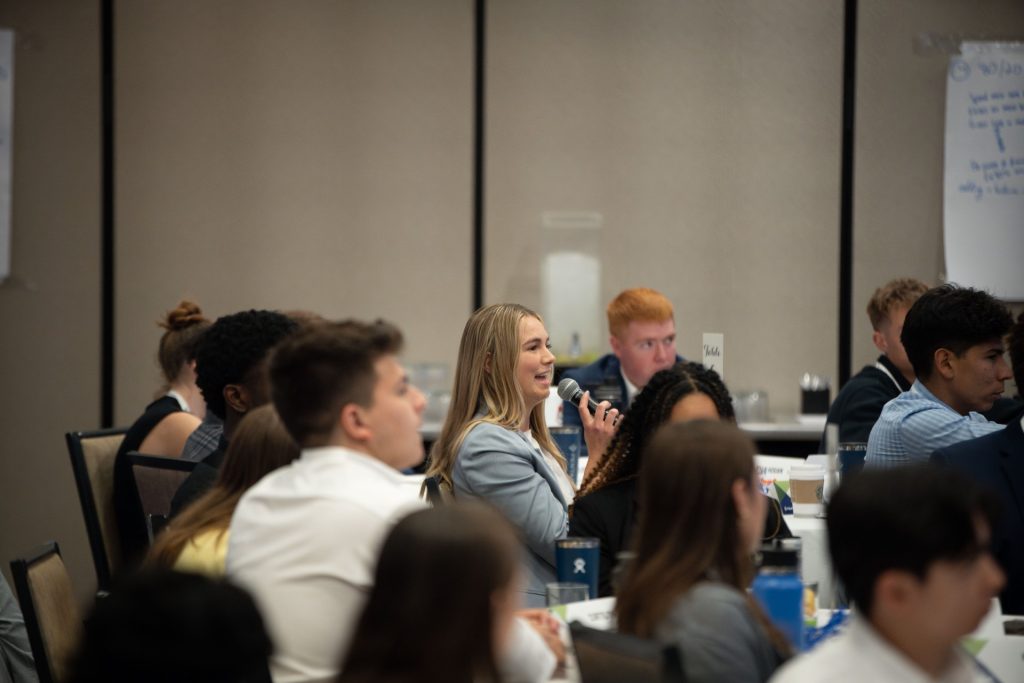
The highlight of the internship came during a company-wide case competition, where Power’s cross-functional team of interns developed a more sustainable version of an existing product. Out of 18 teams, hers reached the finals and won, presenting to the CEO and executive leadership team in front of 100 people. “That was the most nerve-wracking presentation of my life,” Power said, laughing. The company was so impressed they decided to develop the team’s concept into an actual product. Power will return to Pentair after graduation for a three-year rotational marketing role.
Diving deeper into design
Power’s graphic design work extends beyond her internship. She has created websites for her mother’s small business and a local nonprofit, and she takes on freelance logo and branding projects for student organizations at UW–Madison and professional clients. Thanks to the iSci major, during these projects, “I’m not just thinking about how it looks, I’m thinking about how it functions, and how people would view it or read it,” she explained.
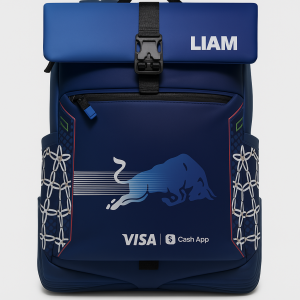
This user-centered perspective extends to Power’s thoughts on AI in design. While today’s image-generation models can create logos, for example, Power argued that thoughtful design requires human creativity. “If you ask AI to generate a logo for your coffee shop, you’ll get something relatively uninspiring,” she said. “It’s not going to be as personalized or aligned with brand values as it could be.”
For students considering similar paths to her own, Power’s advice centers on intentionality and self-awareness. She is purposefully taking only 12 credits this semester rather than maxing out her schedule, a choice influenced by books like Oliver Burkeman’s 4000 Weeks and Cal Newport’s Slow Productivity, which emphasize how a fulfilling life comes not from maximizing output, but from accepting limits and dedicating time and energy to what matters most. The philosophy is simple and powerful: Prioritize what energizes you, and trust that doing fewer things well beats burning out by trying to do everything all at once.
If you’re interested in working with Bella Power, you can find her portfolio and contact information on her design website.
Learn more about the Information Science major.