The Wisconsin Library School at 120: Rediscovering a history of leadership and impact
By Thomas Jilk
Drawing on rich historical collections, a team of scholars is rediscovering the people, places, and practices that built today’s Information School.
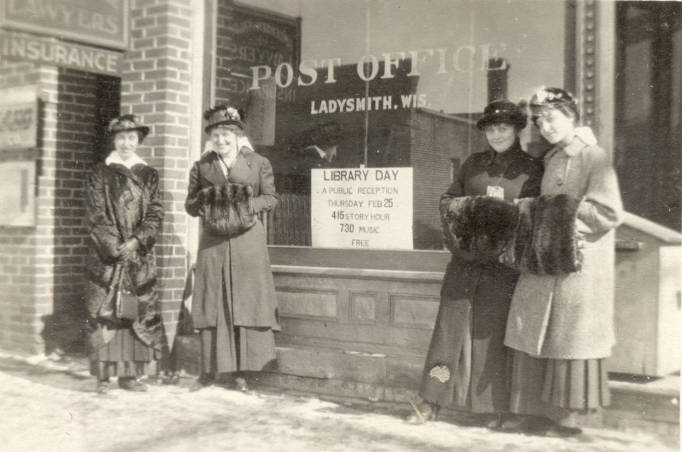
“A librarian should be bigger than the day’s work and its routine,” wrote Mary Emogene Hazeltine, the first head of the Wisconsin Library School, in 1922. Librarians should have “a vision of the field as a whole, but while working towards the plans of the future,” she said.
With her forward‑looking focus on impact, service, and problem‑solving, Hazeltine set the tone for more than a century of library and information professionals to train in Madison at one of the first — and finest — library schools in the country.
As new technologies reshaped how information circulates, the Wisconsin Library School, established in 1906, became the School of Library and Information Studies in 1981 and the Information School in 2017. But through waves of change, one constant was the deep commitment among faculty, staff, and students to preserve and study the School’s own rich history.
The department’s recent move to Morgridge Hall created a rare moment to take stock of its materials at scale. Over the past two years, a team led by Collections Project Coordinator Bronwen Masemann has reviewed, cataloged, and stabilized tens of thousands of items, nearly 60,000 volumes in total, formerly housed in the iSchool Library. Much of this work has focused on core research materials that remain vital to scholars, practitioners, and the public. But alongside those materials sits a distinct historical collection, including thousands of early annual reports and newsletters that shaped the Wisconsin Library School’s earliest teaching and research. Together, these bodies of material form one of the most comprehensive collections of library and information science resources in the country.
The team has worked with documentation illuminating the School’s early culture, including letters from Hazeltine bound into volumes, student assignments and reminiscences, photo albums, scrapbooks, and correspondences that trace the School’s roots, reach, and networks of connection. These sources reveal a community marked by confidence, ambition, and a belief in the problem‑solving power of information, alongside unavoidable evidence of the biases of the era.
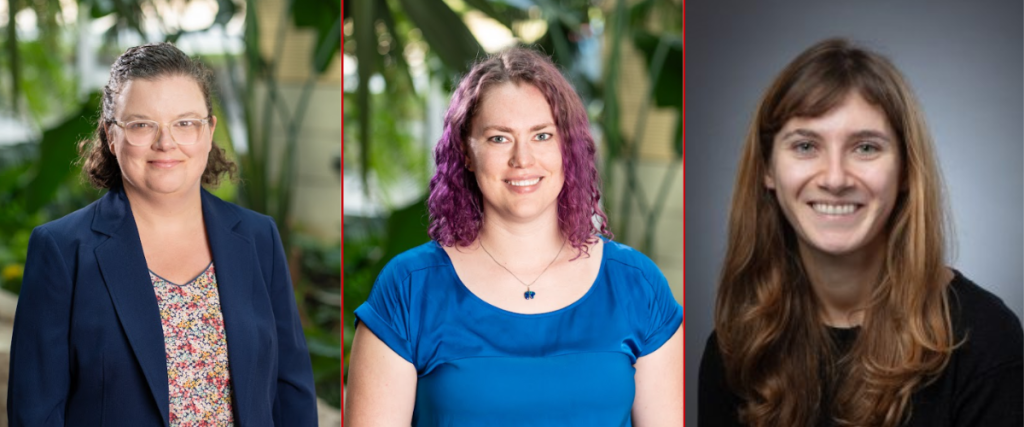
To explore what this rediscovery has surfaced — and how it continues to shape teaching, research, and service at today’s iSchool — we spoke with Masemann, iSchool Librarian Greer Christensen‑Gibbons MA’24, and Library & Information Studies student Maria Hellenbrand MA x’27. In the conversation that follows, they recount a sweeping and intimate history with global reach and profound, enduring impact across the state of Wisconsin.
What drew each of you to this project?
Bronwen Masemann
I actually started working on this historical research when I began working as a cataloger at the iSchool in 2012 and started digging into the historical annual reports collection. I knew that this was a nationally or perhaps internationally important collection based on my background in book history and library history, but it’s been really exciting to work with Greer and with Maria and other students to establish exactly what the scope of the collection is.
Greer Christensen-Gibbons
I was finishing up my last semester in the MA program in 2024 when Bronwen reached out to me saying they were looking for a cataloger. This project sounded really exciting and a once-in-a-lifetime career opportunity, especially for a first-time librarian.
Maria Hellenbrand
I’m a fairly recent add-on to this project. I joined this semester as a project assistant, and the draw was personal, as a library school student and as a Dane County native, to learn about the reach of the iSchool in Madison and beyond.
What has surprised you most as you’ve dug into the collections?
Bronwen Masemann
I continue to be surprised by the richness of the collection, including the people, the stories, and the early libraries. I’ve also really enjoyed looking at the international aspect of the historical library reports.
Maria Hellenbrand
Recently, Bronwen and I were looking through older records, and it occurred to me that there were no archival studies in the early 20th century. That’s something that evolved later, in the 60s and 70s. As someone interested in archival studies, it opened a new question for me, which was how and why did archival studies actually start?
Based on your research, what values or themes defined the Wisconsin Library School’s early culture?
Bronwen Masemann
A theme that emerges from the letters and the early annual reports is a lot of confidence in the students’ and librarians’ ability to solve problems. They believed that if you have enough information and you reach out to the right people, you can solve problems of management or even social problems.
Early graduates very quickly took on positions of great responsibility at libraries around the state and country, and their expectation that they were going to be in positions of responsibility is related to their confidence and problem-solving abilities.
Greer Christensen-Gibbons
I find myself frequently marveling at how much effort our predecessors had to put in to continue to gather and preserve all these materials, including a lot of original correspondence. It struck me that at the core of this effort was deep determination and consistent communication, which remain extremely valuable in our field.
Early graduates very quickly took on positions of great responsibility at libraries around the state and country.
Bronwen, what did you learn about the school’s global reach?
Bronwen Masemann
I can give you a few examples here. There were students who came from the Philippines in 1920; we found some very rare material from libraries in the Philippines from around that date. We had an early alum go on to become one of the most prominent people in the field of library science in China. There were also students from Norway and Denmark, and there were early connections between Wisconsin and Canadian libraries.
At the same time, it’s important to recognize that some of this international work unfolded within the colonialist attitudes of the period. While our own collections don’t include correspondence with the students from the Philippines, broader historical research on UW’s ties to the Philippines in the early 20th century shows how educational exchanges were often shaped by assumptions that are difficult to read today. That context matters here too. The School’s global reach was real, but it existed within the power structures and limitations of its time.
What about impact across Wisconsin itself?
Bronwen Moseman
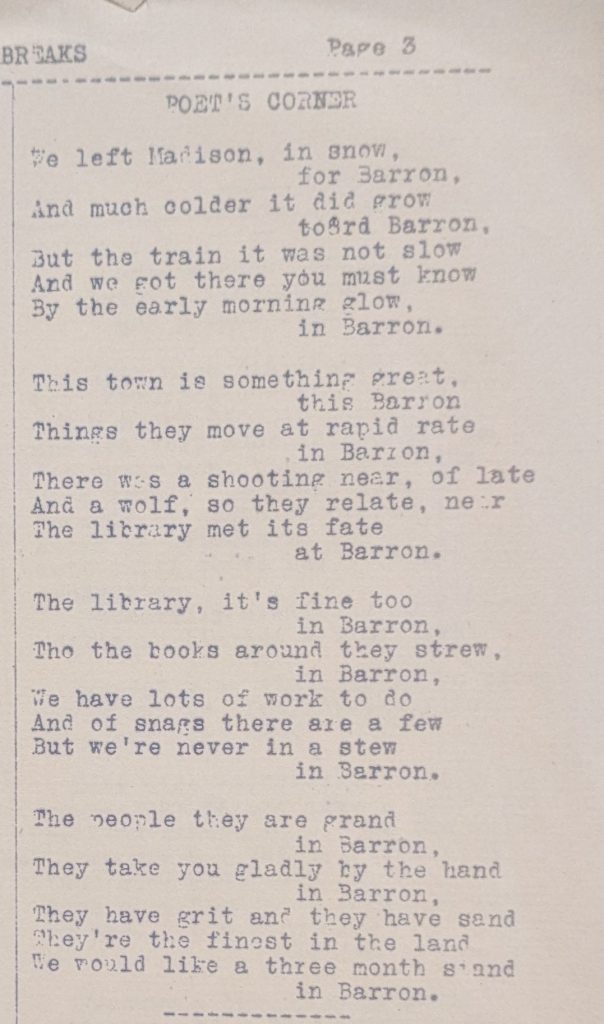
The system of field placement meant that every student, every year, for two months, left Madison to travel to libraries large and small throughout the state. Sometimes the job of the practicum students was to go to a small town or village and start a completely new library. Our graduates laid much of the foundation for the library ecosystem that exists in Wisconsin today. And of course, the practicum program continues to thrive in today’s iSchool.
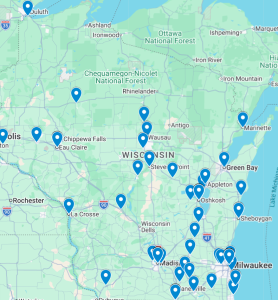
In our research, we also found that instructors often traveled throughout the state by train, sending information and letters back to Madison, asking for resources they could share with libraries. It was a very clear example of the Wisconsin Idea in action.
It was also fascinating to see how work got done quickly and effectively in the pre-digital age using a variety of communication technologies including the postal, telegraph and rail systems alongside strong professional and personal networks. Because the field placements in this period occurred between January and March, there are extremely consistent complaints about how cold it is, making me admire the work of these students even more!
From the collections, which figures or personalities stand out to you?
Bronwen Masemann
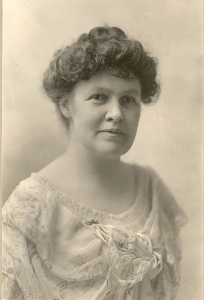
We couldn’t talk about the history of our library school without talking about its first leader, Mary Hazeltine, who shaped the Wisconsin Library School’s earliest decades. The library school was her entire life. She had students over to her house on Sunday afternoons for mending parties and readings of plays and poetry, and she took the students on a fall picnic every year. I admire her dedication to maintaining networks of connection and relationships with students and alumni throughout her entire career.
Greer Christensen-Gibbons
We frequently say Hazeltine had the “bibliographic urge,” a compulsion to collect and organize information, which I relate to. It has also been funny to find references to her in other people’s correspondence, perhaps suggesting that her level of energy and dedication could be too much for some people at times.
Bronwen Masemann
The other person I’d mention is Mary Frances Carpenter, the first librarian of the Wisconsin Library School Library. We didn’t know about her role at all until starting this research, and it’s been exciting to uncover her life story as we handle and catalog the results of her early collecting work. She was an early graduate of Smith College, and after eleven years in Madison, she went to Hawaii in 1917 on a temporary assignment to catalog government documents at the State Library. It seems from her letters to Hazeltine that she had to deal with significant health issues throughout her life, and after leaving Hawaii she was always seeking out jobs that allowed her to live in a warm climate while fulfilling her passion for cataloging and organization.
I like thinking about these young women, including the students doing their field work, who faced a lot of constraints during that period but managed to build lives for themselves that were extremely independent and adventurous.
Maria, tell us about the historic collection of postcards you’ve been exploring.
Maria Hellenbrand
There is a collection of about 2,000 postcards that show correspondence over the years between alumni and colleagues back to the iSchool. All the postcards document images of libraries across the country and abroad. I’m also an art history master’s student, so I was immediately drawn to its visual nature and the documentation of different architectural styles.
One that stood out to me was from the 1950s in Mexico. It’s a very modern block library, but the facades are all mosaics in the pre-Hispanic style. The style looks back through history, but in a very modern way.
How have other students played a role in this work?
Bronwen Masemann
We’ve directly impacted over 300 iSchool students during the course of the project, whether that’s through employment or practicums or classroom visits or hands‑on projects. It has enabled students to participate in conference opportunities, including a group that went to a national conference in Denver last fall to present results of a digital humanities approach to studying the library annual reports. Maria is also coming with us to another national conference in June to present on this work.
Greer Christensen-Gibbons
Cataloging is often a very granular, slow process, but on this project, we’ve had to move fast and think creatively.
The students have been able to figure out ways to streamline processes and offer fresh ideas that I’ve really appreciated.
What do you hope the iSchool’s current community of alumni, students, faculty and staff take away from all of this?
Bronwen Masemann
A lot of what the iSchool stands for now — hands-on learning, interdisciplinary problem-solving, a commitment to service — was there at the very beginning. We’re not discovering something new. We’re rediscovering something that was always true.
Learn more about the Rebecca M. Blank Student Commons in Morgridge Hall, which currently houses a portion of the iSchool Library collections, or read about practicum opportunities for iSchool MA students.