Catching up with alumni shaping the future of library and information education
Meet four alumni putting the Information School’s commitment to public service and community impact into practice.
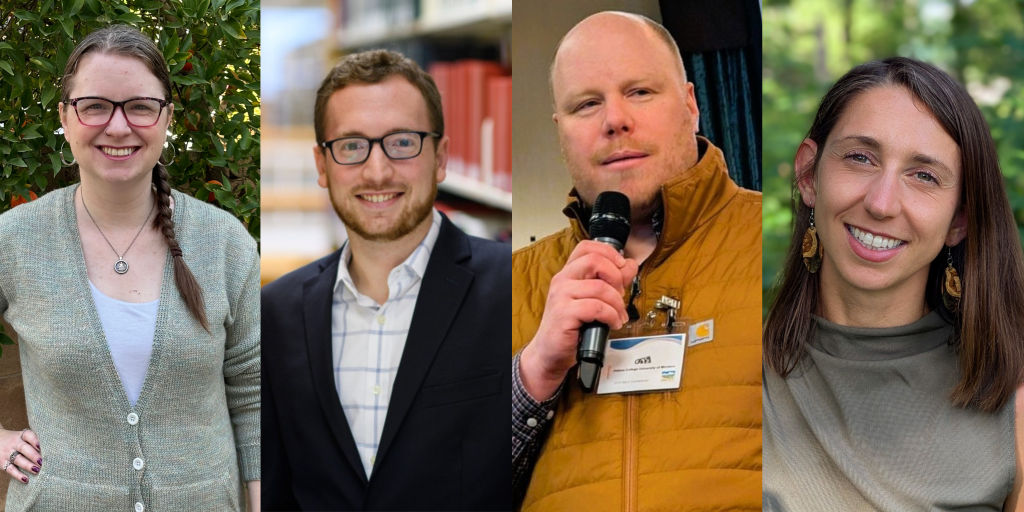
By Thomas Jilk
Nationwide, Information School (iSchool) alumni are shaping the future of education in librarianship and information science through values instilled in them at UW–Madison. While their work environments vary widely, from technology-focused institutions to top-tier law schools and public research universities, each has followed a career path rooted in a commitment to service and impact that the iSchool is well-known for fostering in its graduates.
Whether working in STEM data librarianship in California or law librarianship at Penn, whether offering legal guidance for Montana libraries or conducting research in Rhode Island, our alumni are shaping the future of information education across the country. Their stories offer a glimpse into the ways iSchool alumni are advancing their fields, strengthening the communities they serve, and carrying the Wisconsin Idea forward.
Championing open science and data access
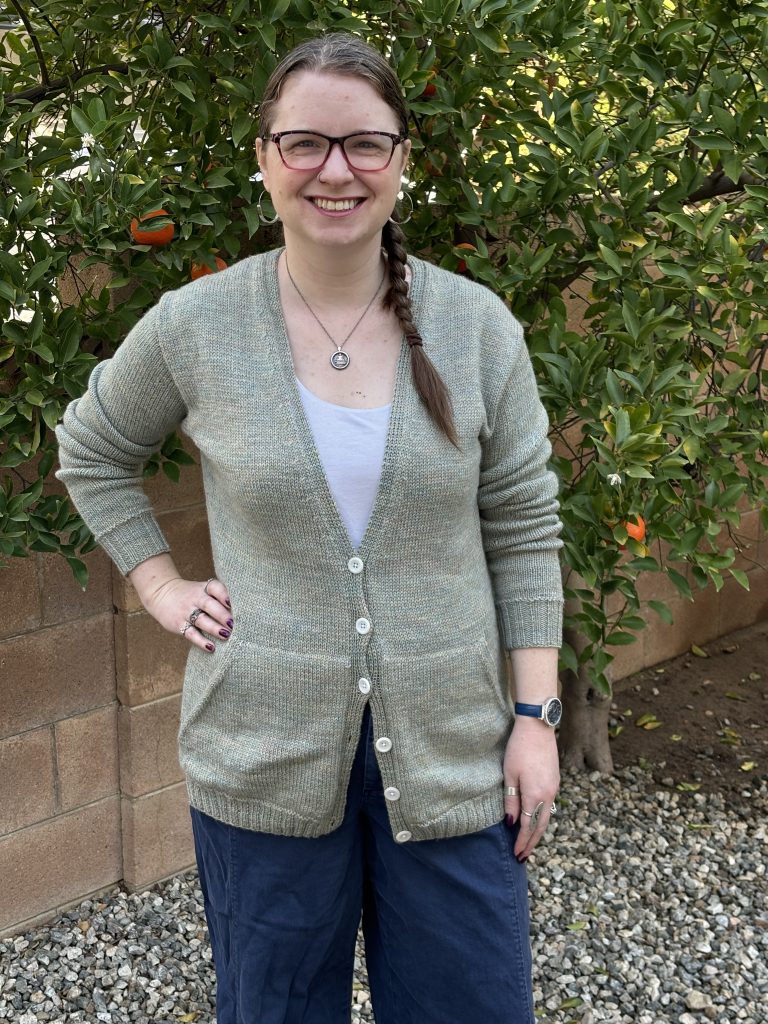
As the Biology & Biological Engineering Librarian at California Institute of Technology (Caltech) in Pasadena, CA, Kristin Briney MA’13 works at the heart of scientific discovery, helping researchers manage data, teach effectively, and make their work accessible to the public. With a PhD in Chemistry from UW–Madison, Briney brings a deeper scientific knowledge to her work than most librarians. Her current role “balances my interest in data work, my background as a scientist, and my love of helping and teaching young scientists,” she explained.
“It’s very important for scientific research to be accessible to everyone,” she added, a principle she learned at the iSchool that guides her instruction and her writing, including three books on data management and privacy. Her most recent book, The Data Management Workbook, provides structured yet flexible exercises to empower researchers across disciplines to tailor data-management plans to the needs of their research workflows. The fundamental principles of data access and management that Briney passionately defends remain staples of the iSchool’s MA program curriculum.
It’s very important for scientific research to be accessible to everyone.
Briney also credits her experience in the iSchool’s practicum program with giving her the instructional grounding in STEM courses she still draws on today. “I now develop and teach many different types of classes, so having the skills to jump into new instructional areas has been really valuable,” she said. In addition, she has continued to keep in touch with iSchool faculty including former advisor Dorothea Salo, with whom she collaborated on a line of research called Data Doubles, focused on student perspectives of privacy issues around library participation in learning analytics initiatives.
Along with Briney’s work at the heart of scientific research, other alumni are applying their iSchool training to very different corners of the information world, including the changing landscape of legal education.
Helping a law library navigate a time of upheaval
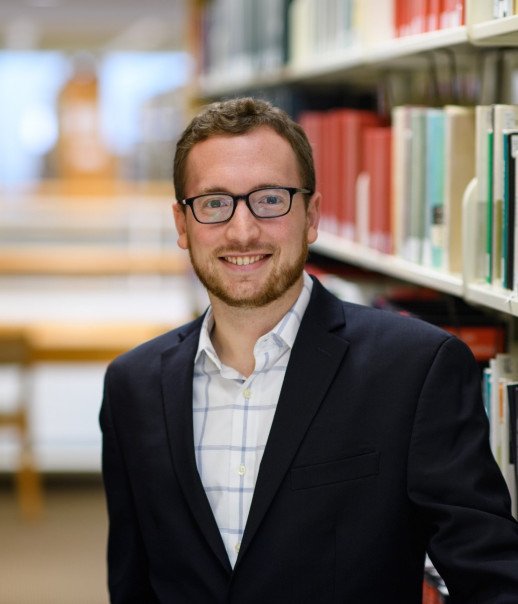
At the University of Pennsylvania Carey Law School, Andrew Lang MA’15 leads a team of research and instruction librarians, teaches across multiple degree programs, and supports law school faculty scholarship. His path in law librarianship took him from Georgetown Law to Penn and placed him in the middle of a period of rapid staff turnover and the disruptions of 2020 — an experience that demanded steady leadership.
When the dust of the pandemic had settled, “We actually grew our staff, expanded our instructional offerings, and emerged in a stronger position than before,” Lang said. He traces his confidence as an instructor to his time as a TA for Professors Greg Downey and Rebekah Willett. Mentorship from faculty focused on legal issues, such as Professors Alan Rubel and Anuj Desai, continues to shape his understanding of how information, technology, and the law intersect. “The stimulating academic environment and the iSchool’s administrative support both played a huge role in preparing me for my subsequent work in academic law libraries,” he reflected.
Lang’s service extends beyond Penn’s campus: he also co‑organized the award‑winning “Project 20/20” virtual programming series to support the professional development of law librarians during the pandemic. Over nine months, “We hosted three virtual events every month: a lecture-style program, a professional development workshop, and a social networking event,” he explained. “Organizing and coordinating these events was a heavy lift, but the initiative proved popular and we received a 2022 Award for Excellence in Community Engagement from the American Association of Law Libraries. It was a great excuse to connect and collaborate with colleagues across the profession during an extremely isolating period.”
The stimulating academic environment and the iSchool’s administrative support both played a huge role in preparing me for my subsequent work in academic law libraries.
Lang offered some practical advice to current iSchool students, speaking from his own experience: “Early in your career, it’s a good idea to think strategically about your long-term goals and the kinds of skills and experiences you will need to achieve them,” he advised, “even if you don’t know exactly where you want to end up. This is a useful exercise because it makes it easier to recognize important opportunities when they appear.”
While Lang’s path shows how iSchool mentorship and instructional grounding translate into law library leadership, other graduates are carrying those same values into community-oriented roles serving patrons across a range of information centers.
Strengthening Montana’s information ecosystem
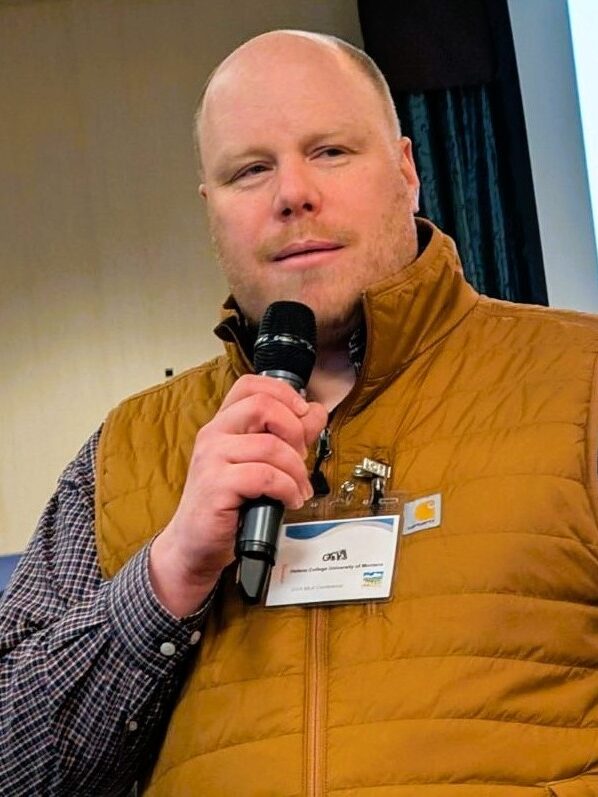
Like Lang, Kris Goss MA’23 blends libraries and the law to support students, libraries, and communities. As Director of the Library Learning Hub at Helena College in Helena, MT, Goss and his team “strive to remove obstacles or barriers that prevent students and faculty from completing their work,” in programs that range from nursing to welding to aviation maintenance.
As an attorney, Goss also provides legal guidance to libraries through a library-focused law practice and the Montana Library Assistance Helpline, a role that provides representation to libraries, answers to operational questions, and “allows for development and delivery of library law training sessions at conferences and virtual events around Montana,” Goss added. “Our hope is that these services help Montana’s library leaders operate with confidence of compliance with evolving patron needs, best practices, laws, regulations, and court decisions.” Additionally, Goss was appointed in 2025 to the Montana State Library Commission, which he said, “presents a unique chance to further empower Montana’s libraries as they serve and support patrons and communities.”
Goss’s work, whether advising library leaders or helping students navigate their first research assignments, reflects a belief that libraries should meet people where they are to best help them make progress. In serving the citizens of Montana, Goss explained, “I try to bring the Wisconsin Idea to my work each day. If we are not using our training, experiences, and skills to serve or improve our communities, then what was the reason we chose this profession and this university? We have to find ways to be of service.”
As a remote student in the MA program, Goss recalled, “I had to try new ways to collaborate … Each of those methods was a valuable learning experience. Thankfully, fellow students and the faculty were supportive and kind leaders who demonstrated and practiced the best way to be helpful.” He added, “Beyond the nurturing atmosphere of the iSchool, the content of each course taught me important lessons in librarianship and leadership that I rely on each day. Specifically, objectivity and empathy are themes from my time in the iSchool that remain critical to my work today.”
Beyond the nurturing atmosphere of the iSchool, the content of each course taught me important lessons in librarianship and leadership that I rely on each day.
The same commitment to equity and access behind Goss’s work in Big Sky Country also shapes the careers of alumni advancing research and teaching in library and information science programs on the east coast.
Investigating how libraries support children’s learning
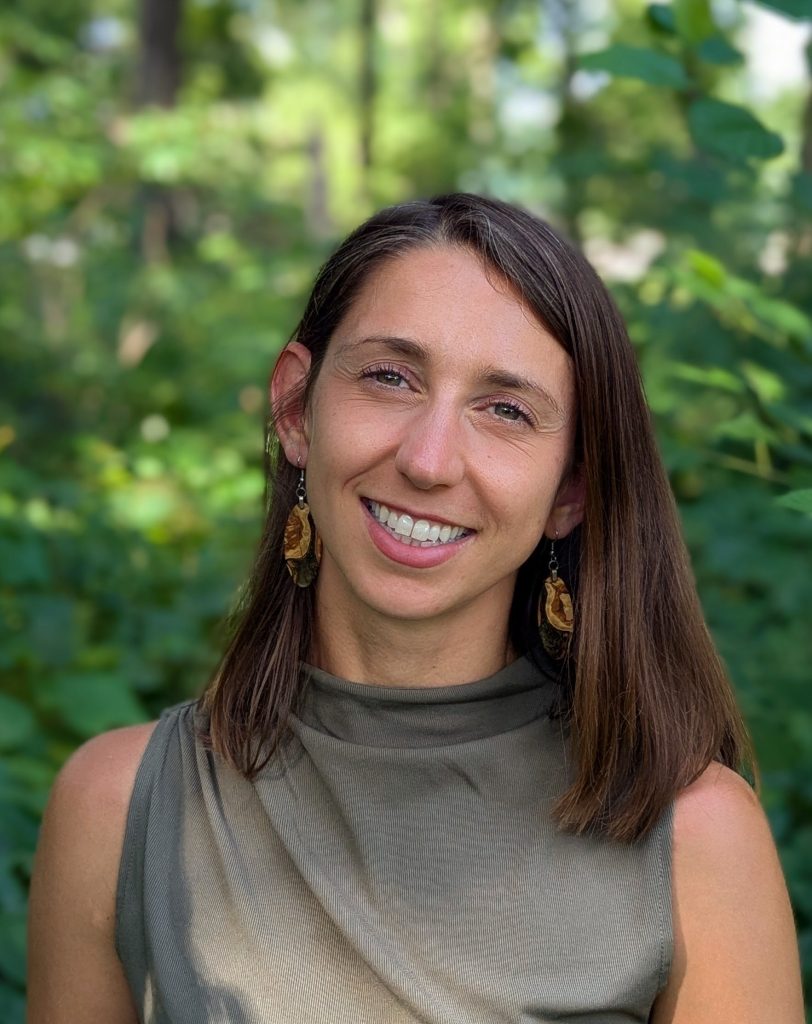
After completing her PhD at the iSchool under the guidance of her faculty adviser Professor Rebekah Willett, Jacqueline Kociubuk PhD’25 landed a role as assistant professor at the University of Rhode Island (URI) Graduate School of Library and Information Studies. She studies how public libraries function as informal learning spaces for children and families, with a focus on equity of access. Kociubuk brings her sharp research focus into the classroom as coordinator of the Information Equity, Diverse Communities, & Critical Librarianship track for URI graduate students.
Kociubuk credits the iSchool’s faculty, including Willett and others, with shaping her as a researcher. “Because the faculty at the iSchool have expertise in such a wide array of research areas, methods, and theories, I feel that I was able to develop myself as an interdisciplinary scholar,” she said.
Kociubuk is now serving as a co‑investigator on a National Science Foundation–funded project exploring how “tinker‑telling play” — an educational approach combining hands-on exploration with storytelling — can help libraries and museums deepen computational thinking experiences for young children. The work underscores how libraries can spark curiosity and expand opportunities for kids and families. “I find it deeply rewarding to continue to pursue research that can help better the world around us” Kociubuk said.
Because the faculty at the iSchool have expertise in such a wide array of research areas, methods, and theories, I feel that I was able to develop myself as an interdisciplinary scholar.
As for her guidance for current students, she advised, “Seek out advice and mentorship from scholars that you admire and respect throughout your field of study. There is a wealth of knowledge out there to learn from, and many people are eager to support students and early-career professionals by sharing their insights!” Finally, she added, “Continue to ask questions and stay curious about the world around you. Research is hard work, so it’s helpful if you can find it rewarding or pursue areas you’re passionate about.”
Explore the iSchool’s academic programs.
Get more alumni news and updates by reading our semesterly alumni newsletter, Jottings.